
Hialeah is one of the most densely populated cities in Florida, and anyone who drives regularly along Okeechobee Road, Palm Avenue, or through the tightly packed grid of residential streets knows exactly what that density means behind the wheel. Traffic here rarely moves in a smooth, consistent flow. Instead, it creeps forward in short bursts punctuated by frequent, complete stops, and this particular driving pattern puts a specific kind of strain on your automatic transmission that many drivers do not fully appreciate until fluid service becomes overdue.
Why Stop And Go Traffic Is Uniquely Hard On A Transmission
An automatic transmission relies on smooth, relatively infrequent shifting to operate efficiently and generate manageable heat. Highway driving, where a transmission settles into a higher gear and stays there for extended stretches, is genuinely gentle on this system. Hialeah’s dense city traffic asks for the opposite, forcing a transmission to shift between drive and a near stop repeatedly, sometimes dozens of times within a single mile of congested driving.
Each of these shifts generates friction and heat inside the transmission, and while a transmission is built to handle this kind of demand to some degree, the sheer frequency of shifting in Hialeah’s traffic conditions produces considerably more cumulative heat than a similar amount of highway mileage would. Heat is one of the primary factors that breaks down transmission fluid over time, which means dense city driving accelerates fluid degradation well beyond what standard maintenance intervals typically assume.
Why Transmission Fluid Matters So Much Here
Transmission fluid serves multiple purposes at once, lubricating internal components, helping to cool the transmission, and enabling the hydraulic pressure that allows smooth shifting between gears. As this fluid breaks down from repeated heat exposure, it becomes less effective at all three of these jobs simultaneously, which is why declining fluid condition tends to show up as a cluster of related symptoms rather than just one isolated issue.
Fluid that has broken down loses some of its lubricating properties, increasing friction and wear on internal transmission components. It also loses some of its ability to transfer heat away from the transmission effectively, which creates a compounding problem where degraded fluid contributes to even more heat buildup than the driving conditions alone would cause.
Signs That Your Transmission Fluid Service Is Overdue
A transmission that shifts roughly, with a noticeable clunk or jolt between gears rather than a smooth transition, is one of the more common early signs that fluid condition has declined. Delayed engagement, where there is a pause before the transmission actually responds after shifting from park into drive, can also indicate fluid that is no longer providing adequate hydraulic pressure.
Slipping is another symptom worth watching for, where the engine’s RPM rises noticeably without a corresponding increase in speed, as if the transmission is momentarily struggling to find the right gear. This can feel subtle at first, sometimes only noticeable when accelerating from a stop in heavy traffic, but it tends to become more pronounced over time as fluid condition continues to decline without intervention.
A burning smell, distinct from typical exhaust or brake odor, often points to transmission fluid that has overheated and broken down significantly. Fluid that appears dark brown or black, rather than the clear reddish color of healthy fluid, is a fairly reliable visual indicator that a service is overdue. If you have also experienced a starting issue alongside these transmission symptoms, our guide on the top 10 reasons your car won’t start and how to get back on the road covers a range of causes worth ruling out separately from any transmission concerns you may be noticing.
Why Standard Intervals Do Not Fully Apply Here
Manufacturer recommended transmission fluid intervals are generally built around an assumption of normal driving conditions, and stop and go traffic is specifically classified as severe driving in most owner’s manuals. Hialeah’s dense city traffic fits this severe driving classification for a meaningful portion of nearly every trip, which means drivers here often benefit from following the severe service interval rather than the standard one, even if their total annual mileage looks fairly modest on paper.
A driver commuting the same distance primarily on open highway elsewhere in the state could reasonably stretch their transmission fluid service further than the standard interval suggests, while a Hialeah driver covering similar mileage almost entirely in dense city traffic should generally service transmission fluid sooner, since the nature of the driving itself, not just the distance covered, determines how much wear the transmission actually experiences. This distinction is easy to overlook when relying purely on the mileage sticker left by a previous service, since that sticker has no way of accounting for the specific driving pattern a vehicle has actually experienced since the last change.
Simple Habits That Help Extend Transmission Life Here
Allowing your vehicle a moment to fully stop before shifting between drive and reverse, rather than shifting while still slightly rolling, reduces unnecessary strain on transmission components during the kind of tight parking maneuvers common in Hialeah’s dense residential streets. Avoiding unnecessary idling in drive during extended stops, when safe and practical to do so, can also reduce some of the cumulative heat buildup that comes with sitting in traffic for long periods.
Having transmission fluid checked proactively rather than waiting for an obvious symptom gives you the chance to address declining fluid condition before it progresses into more serious wear on internal components, which is a considerably more affordable fix than a full transmission repair or replacement down the line.
Why A Mobile Mechanic Fits Hialeah’s Driving Reality
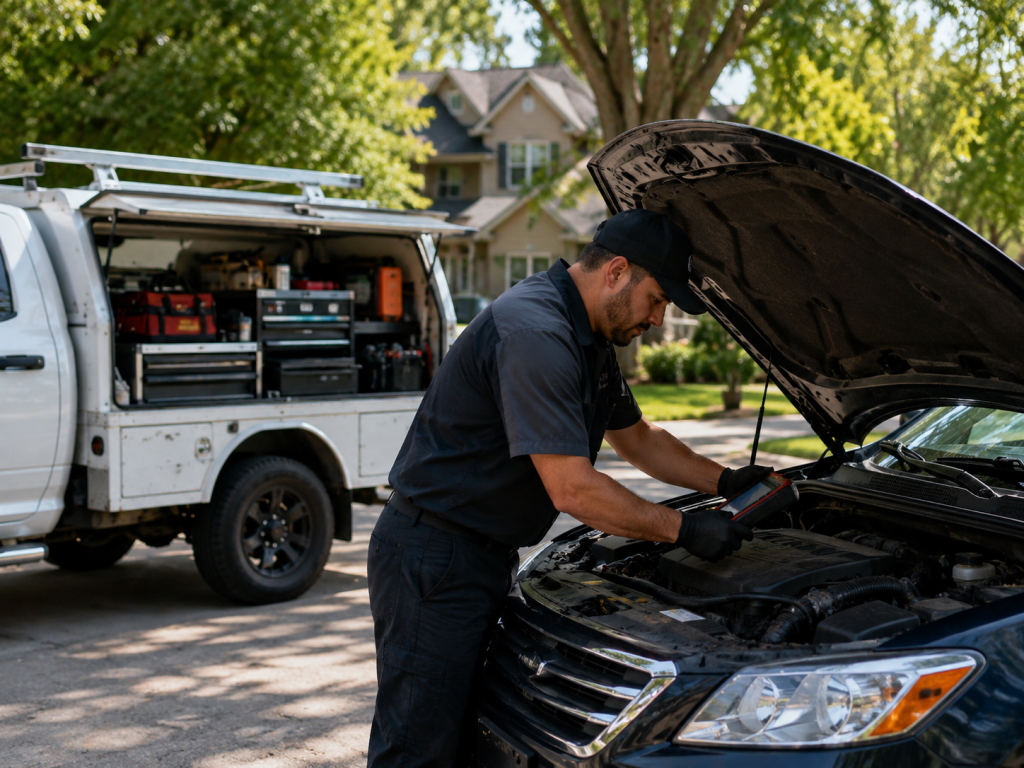
Given how much time is spent navigating Hialeah’s dense traffic on a daily basis, adding a separate trip to a repair shop for transmission service is not appealing. A mobile mechanic can come to your home or workplace and check transmission fluid condition, along with performing a service if needed, without requiring you to navigate the same congested streets that caused the extra wear in the first place.
We covered the broader advantages of this approach in our article on why mobile mechanics are better than traditional auto shops in Hialeah, which explains how convenience and flexible scheduling come together, particularly valuable for drivers whose daily routine already involves plenty of time stuck in traffic.
Stay Ahead Of What Hialeah’s Traffic Is Doing To Your Transmission
Hialeah’s density is not likely to change, and neither is the extra strain it places on automatic transmissions compared to a less congested city. Paying attention to shifting quality, fluid color, and other early warning signs, rather than waiting for a dashboard light or a complete failure, is one of the most effective ways to keep your transmission reliable despite the demands of daily stop and go driving.
If it has been a while since your transmission fluid was checked, visit our homepage to learn more about our services, or reach out through our contact us page to schedule a visit at your home or office anywhere in the Hialeah area.
A little proactive attention now can help your transmission keep up with everything Hialeah’s dense traffic asks of it every single day.