
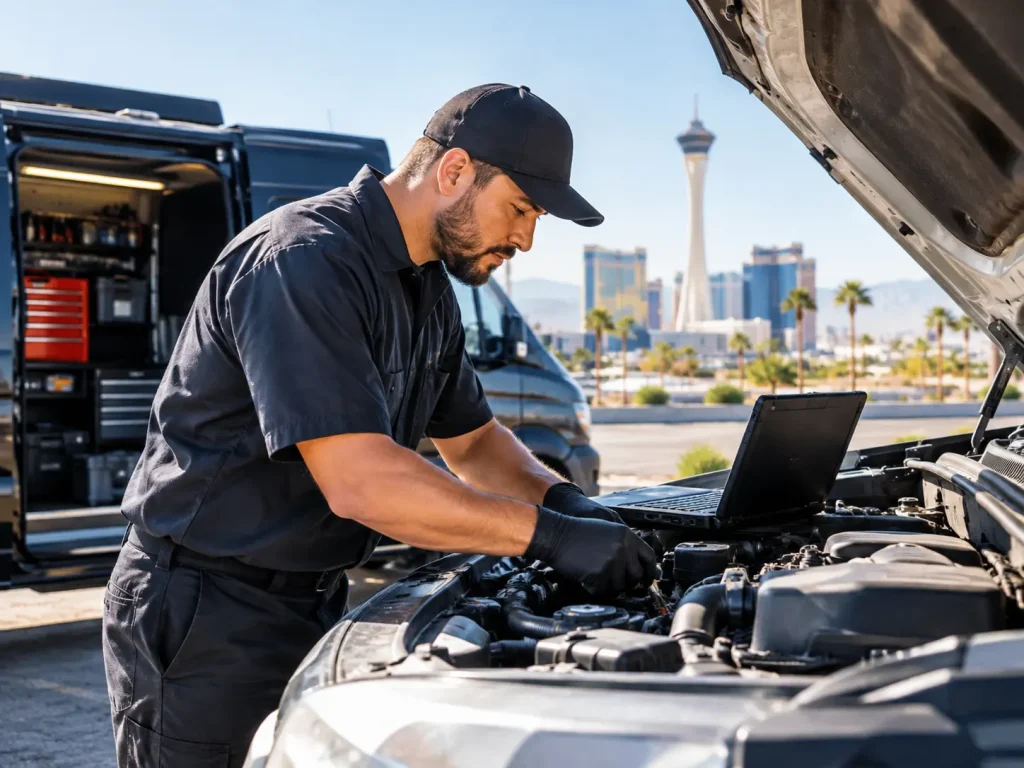
Your engine makes a tremendous amount of heat, and something has to carry that heat away before it does damage. That job falls to the cooling system, and the water pump is the part that keeps the coolant moving. When a water pump starts to fail, the warning signs can be subtle at first, such as a faint whine or a small drip, but the consequences of ignoring them can be severe. In a city like Hialeah, where heat, humidity, and heavy traffic are part of daily driving, a weak water pump can push an engine into overheating quickly. This guide explains what a water pump does, the symptoms of water pump failure, why you should act fast, and how water pump repair in Hialeah can be handled without a trip to the shop.
What Does a Water Pump Do?
The water pump is a small but essential part mounted on the front or side of the engine. It circulates coolant through the engine block, the cylinder head, the radiator, and the heater core. As the coolant flows, it absorbs heat from the engine and releases it through the radiator. Without that constant circulation, heat builds up fast. In many vehicles, the pump is driven by the serpentine belt, while in others it is driven by the timing belt or timing chain. Inside the pump are an impeller that moves the fluid, a bearing that lets it spin, and a seal that keeps coolant from leaking out.
Warning Signs of a Failing Water Pump
1. Coolant Leaking From the Front of the Engine
One of the most common signs is a leak. Pumps have a seal that wears over time, and when it fails, coolant escapes. Many pumps have a small opening, often called a weep hole, designed to let a bit of fluid out as a warning that the seal is going bad. You may see puddles under the front of the car, or dried coolant residue, which can look crusty or colored, around the pump. Coolant often has a sweet smell, so a syrupy odor after driving can be another clue.
2. Whining, Grinding, or Squealing Noises
The bearing inside the pump can wear out, and a worn bearing often makes a whining or grinding sound that changes with engine speed. A loose or damaged belt can squeal, and a failing bearing can make that belt noise worse. If you hear a new noise coming from the front of the engine, do not assume it is harmless.
3. Engine Overheating
If the pump cannot move enough coolant, the engine temperature climbs. You might see the temperature gauge rise above its usual position, a warning light come on, or the engine run hot in traffic and on hot days. Overheating is the most serious symptom, because it can lead to expensive engine damage.
4. Steam From Under the Hood
Steam or vapor rising from the engine area usually means coolant is boiling or leaking onto hot parts. If you see it, pull over safely and turn off the engine.
5. Low Coolant Level With No Obvious Cause
If you keep having to add coolant, there is a leak somewhere in the system. The water pump is a common source, along with hoses, the radiator, and gaskets. Checking the level only when the engine is cold gives the most accurate reading.
6. Wobbling or Loose Pulley
When the bearing wears badly, the pulley on the pump can wobble or feel loose. A technician can check this by hand with the engine off. A pump with a wobbling pulley can damage the belt and, in a worst case, stop turning altogether.
7. Heater Not Working Properly
The heater relies on hot coolant flowing through the heater core. If the pump is not circulating well, the cabin heater may blow lukewarm or cold air even when the engine is warm. In a place like Hialeah you may not use the heater often, so this sign is easy to miss.
8. Rust, Corrosion, or Deposits Around the Pump
Old or contaminated coolant can corrode the pump, leaving rust or crusty buildup. That can point to a leak or to a cooling system that has not been serviced on schedule.
Why You Should Act Fast
It is tempting to keep driving when the symptoms are mild, but a water pump that fails completely can stop circulating coolant in minutes. An engine that overheats can suffer a warped cylinder head, a blown head gasket, damaged pistons, or a seized engine. Those repairs can cost far more than the car is worth, while replacing a water pump is a routine repair when caught early. If the pump is driven by the timing belt, a failure can also damage the belt, and on some engines a broken timing belt can cause severe internal damage. Acting at the first sign can save you from a much bigger bill.
What Causes a Water Pump to Fail?
- Normal wear on the bearing and seal over many miles
- Old, worn out coolant that no longer protects against corrosion
- The wrong type of coolant, or mixing coolants that are not compatible
- Contaminants, rust, or scale in the cooling system
- A loose, overtightened, or worn drive belt that puts stress on the bearing
- Running the system low on coolant, which can let air into the pump
- Heat and constant stop and go driving that put extra load on the cooling system
Our article on stop and go traffic and your transmission, a Hialeah driver’s guide explains how heavy traffic strains major systems in your car. The cooling system takes the same punishment, which is one reason water pumps and other cooling parts are worth watching in this area.
How Is a Failing Water Pump Diagnosed?
A technician can usually tell a lot with a careful inspection. Typical steps include:
- Looking for leaks, residue, and corrosion around the pump and weep hole
- Checking the coolant level and condition
- Pressure testing the cooling system to find leaks
- Inspecting the belt and checking the pulley for play or wobble
- Listening for bearing noise
- Testing the thermostat, radiator, hoses, and fans, since several parts can cause overheating
- Checking the temperature of the engine and the flow of coolant
Because other problems can look like a bad water pump, a proper diagnosis is better than guessing. A clogged radiator, a stuck thermostat, or a failed fan can cause similar symptoms.
What Happens During Water Pump Replacement?
The exact process depends on your vehicle. In general, the technician drains the coolant, removes the belt and any parts in the way, takes off the old pump, cleans the mounting surface, installs a new pump with a fresh gasket or seal, and reassembles everything. Then the system is refilled with the correct coolant and bled of air, and the car is tested for leaks and proper temperature. If the pump is driven by the timing belt, it is often recommended to replace the belt and related parts at the same time, since much of the labor overlaps. Your owner’s manual or a technician can tell you what applies to your car.
Can I Keep Driving With a Failing Water Pump?
It is not a good idea. If the gauge is climbing or you see steam, pull over safely, turn off the engine, and let it cool completely before opening the hood. Never open the radiator or coolant cap on a hot engine, because the system is under pressure and can release scalding fluid. If the symptoms are mild, such as a small leak or a faint noise, do not wait. Have the car inspected as soon as possible, and avoid long trips or heavy traffic until it has been checked. If your car will not start after an overheating episode, our guide to the top 10 reasons your car won’t start and how to get back on the road covers other possible causes.
How Can I Help My Water Pump Last Longer?
- Replace the coolant at the interval in your owner’s manual
- Use the type of coolant your vehicle requires and avoid mixing different types
- Check the coolant level regularly, when the engine is cold
- Have belts and hoses inspected, and replace them on schedule
- Fix small leaks early, before they grow
- Pay attention to the temperature gauge, especially in traffic and in summer
- Have the cooling system inspected before the hottest months
Water Pump Repair With a Mobile Mechanic in Hialeah
In many cases, a mobile mechanic can inspect and replace a water pump right at your home or workplace in the Hialeah area. That saves you the cost and trouble of a tow and the wait at a shop. Some vehicles bury the pump deep in the engine or require special tools and extended time, and a trustworthy technician will tell you honestly if a particular job needs a full shop. When you book, describe what you have noticed, such as leaks, noises, overheating, or low coolant, and share your vehicle’s year, make, model, and mileage so the right parts can be ready.
Do Not Wait for Overheating
A failing water pump almost always gives some warning before it quits. A leak, a whine, or a gauge that runs a little warm is your chance to act while the repair is still simple. Catching it early protects your engine and keeps a small repair from turning into a very large one.
To learn more about our services, visit our homepage. If you suspect your water pump is failing, reach out through our contact us page and we will come to you anywhere in the Hialeah area.